
Historical Accounts
A source-critical archive of ancient references, regional traditions, pilgrimage reports, traveler accounts and modern eyewitness testimony connected with Noah’s Ark.
Source discipline
What Was Said—And When?
Ark stories are often repeated centuries after the event being described. ArkSearch records both the date of the alleged event and the date of the surviving source so readers can see the evidentiary distance for themselves.
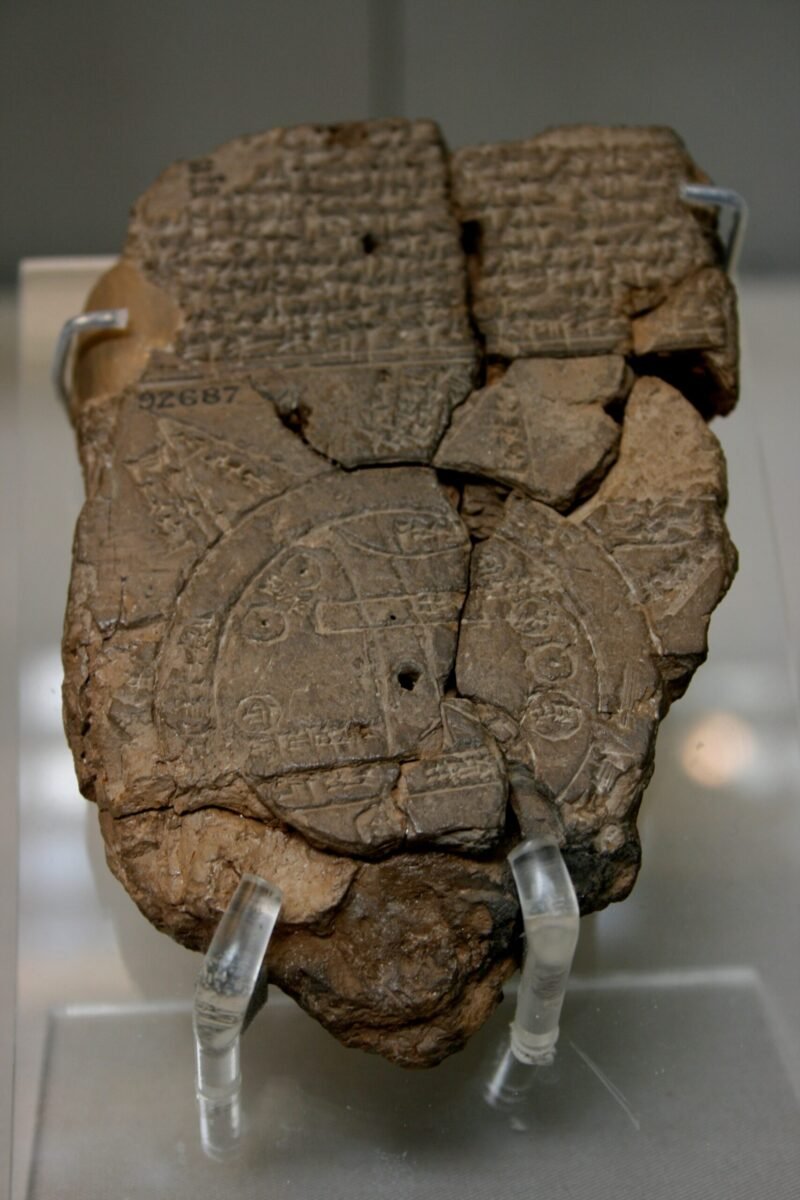
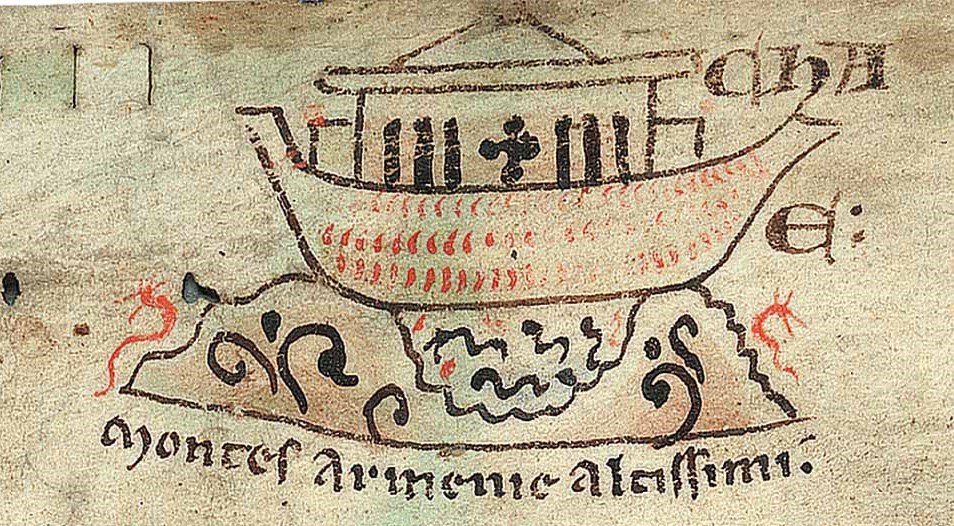
Jewish & Near Eastern Sources
Accounts preserved by ancient historians and later writers are cataloged by text, manuscript history, place names and what the source actually claims.
Geographers & Chroniclers
Christian writers preserve inherited landing-place traditions and reports about surviving remains. ArkSearch will distinguish quotation, hearsay and claimed direct knowledge.
Pilgrims & Travelers
Travel literature records sacred geography as it developed across Armenia, Mesopotamia and surrounding regions.
Eyewitness Reports
Twentieth-century sighting claims are logged with interview date, alleged sighting date, location detail, internal consistency, corroboration and later retellings.
Source Journey / Interactive
Follow the Tradition Without Blending It
The search changes character over time. Filter the archive to follow Cudi geography, Ağrı Dağı traditions, or the transition into modern field investigation. These entries are starting points for full source dossiers, not final verdicts.
Josephus
Josephus preserves earlier traditions concerning the Ark’s resting region and reported surviving remains. ArkSearch treats him as a transmitter of older material and tracks which geographic terms belong to Josephus himself versus later translators.
Sennacherib, Mount Nipur & the Ark-Plank Tradition
Sennacherib’s own inscriptions document his fifth campaign on and around Mount Nipur, identified in Assyriological literature with Judi/Cudi Dagh. The Assyrian record establishes that the king was physically in this landscape a few years after his 701 BC campaign in Judah; it says nothing about Noah’s Ark.
Centuries later, Babylonian Talmud Sanhedrin 96a preserves a separate tradition that Sennacherib found a beam or plank from Noah’s Ark, treated it as a god, and was later killed by his sons after they overheard his vow to sacrifice them. The rabbinic passage connects the story to the biblical account of his death in the house of Nisroch, but it does not itself identify Mount Cudi.
Read Sanhedrin 96a → Open the Sennacherib inscription record →
Qur’an 11:44 — al-Jūdī
The Qur’anic Flood account states that the vessel settled upon al-Jūdī. This creates a separate textual location tradition that must be mapped through early Islamic geography rather than simply equated with a modern mountain name.
al-Masʿūdī and regional geography
Medieval Islamic geographical traditions place Cudi in the Jazira/Mosul–Cizre world and preserve claims connected with the Ark’s resting place. The individual texts need to be read in their own geographic vocabulary.
Yāqūt al-Ḥamawī
Yāqūt’s geographic tradition is important for locating Cudi within the upper Mesopotamian/Jazira region. ArkSearch will cross-reference his place names with routes, rivers and settlements rather than relying on English labels alone.
Marco Polo
Marco Polo’s travel tradition describes a great snow-covered mountain in Greater Armenia associated with Noah’s Ark and inaccessible near its summit. The account belongs to the development of the northern mountain tradition, but it still requires careful geographic identification.
Ibn Battuta
Travel literature from the Cizre region preserves Cudi as the mountain associated with the Ark. ArkSearch will distinguish his travel observation from the religious geography supplied by guides and inherited tradition.
Parrot & Abovian ascent
The first recorded modern summit ascent of Ağrı Dağı marks a shift toward instrumented exploration. Expedition reports allow routes, measurements, companions and observations to be checked against later retellings.
James Bryce
Bryce climbed Ağrı Dağı and reported finding a piece of timber high on the mountain while also acknowledging possible ordinary explanations for its presence. The episode is an ideal case study in separating recovery from interpretation.
Gertrude Bell
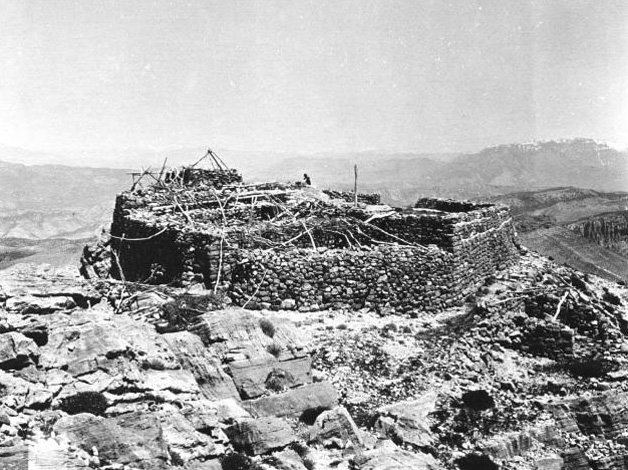
Bell’s diary and photographs document her travel on Cudi Dagh and summit ruins associated locally with Noah traditions, providing an unusually concrete visual and written field record.
İlhan Durupınar & aerial imagery
The boat-shaped formation entered modern Ark-search history after Turkish military cartographer İlhan Durupınar noticed it in aerial survey imagery. The site’s modern history begins with a photograph and an interpretation—not an excavation.
Primary Source Desk / Trace the Claim
Read the Source Before the Tradition
Three examples show how ArkSearch will handle historical evidence: identify the surviving source, preserve its actual geographic language, state what the record establishes, and stop before the source is made to prove more than it says.
Josephus
Josephus transmits earlier traditions that refer to Armenia and, in his quotation of Berossus, the mountain of the Cordyæans.
A first-century Jewish historian knew multiple older traditions claiming that remains of the Flood vessel survived in a named regional setting.
It does not independently verify surviving Ark material or identify the summit of modern Ağrı Dağı.
Sennacherib / Nipur
Sennacherib’s royal inscriptions describe operations against communities on and near Mount Nipur; the Judi Dagh inscriptions are tied to this campaign in the modern Assyriological corpus.
Sanhedrin 96a says Sennacherib found a beam from Noah’s Ark and fashioned or treated it as a god. This tradition was recorded centuries after Sennacherib and must be evaluated as rabbinic interpretation, not an Assyrian eyewitness text.
Neither source proves that Ark remains were present on Cudi in Sennacherib’s day. The proposed connection depends on combining a documented campaign location with a separate later tradition.
Qur’an 11:44
The Arabic text uses the proper noun al-Jūdī / الجودي; the Quranic Arabic Corpus parses it as a proper noun.
A distinct early Islamic textual tradition explicitly names al-Jūdī as the place where the vessel came to rest.
The verse alone does not map that ancient name onto a precise modern coordinate; that requires the history of interpretation and regional geography.
Gertrude Bell
Bell’s diary records travel to Cudi Dagh / Cudi Dağı and describes her route and climb in a contemporary field record.
A named early-twentieth-century explorer physically visited the Cudi landscape and left a primary written and photographic archive.
Her documentation proves the visit and historical setting, not that the photographed ruins were remains of Noah’s Ark.
Citation model
Every Account Keeps Its Provenance
| Field | Recorded information |
|---|---|
| Source date | When the surviving text, interview or publication was created |
| Claimed event date | When the reported sighting or tradition is said to have occurred |
| Source type | Primary testimony, quotation, secondhand report, tradition, later retelling |
| Location language | Original geographic term plus later identification |
| Assessment | Corroboration, contradictions, transmission issues and open questions |